

Eastmoor Reinvestment Project
Client: Eastmoor Neighborhood Residents
Funders: Hope Community Partners, Mississippi Home Corporation, Goldman Sachs, Federal Home Loan Bank of Dallas, Robert Wood Johnson Foundation, NeighborWorks America, Enterprise Community Partners, and private donors
Partners: Eastmoor Residents' Association, Hope Community Partners, University of Mississippi - Housing Law Clinic, City of Moorhead, Sunflower County, Mississippi State University CAAD and CSTC, and many others
Timeframe: 2016-2021
The Eastmoor Circle neighborhood was the primary focus of Delta DB’s efforts from 2016 through 2021. The project included numerous and varied community engagement activities, collaboration with Mississippi State University's CAAD on an NCARB Award winning course "Expanding the Agency of Architects", interfacing with public officials on infrastructure upgrades, construction of a playground, repair of 26 homes, and construction of 14 new homes.
Read more about Eastmoor, and the design and engagement lessons Delta DB learned through the work in "7 Ways to Design Housing that Builds Equity for Rural People and Places", a rural analog to David Baker's "9 Ways to Make Housing for People". Eastmoor has also been the topic of numerous speaking engagements including a main stage presentation at AIA's 2022 Women's Leadership Summit.
Eastmoor, and Delta DB's work in general, is featured as a chapter of Katie Swenson and Harry Connolly's book
"Design with Love: At Home in America". Several of Connolly’s photographs from the book are shown here.
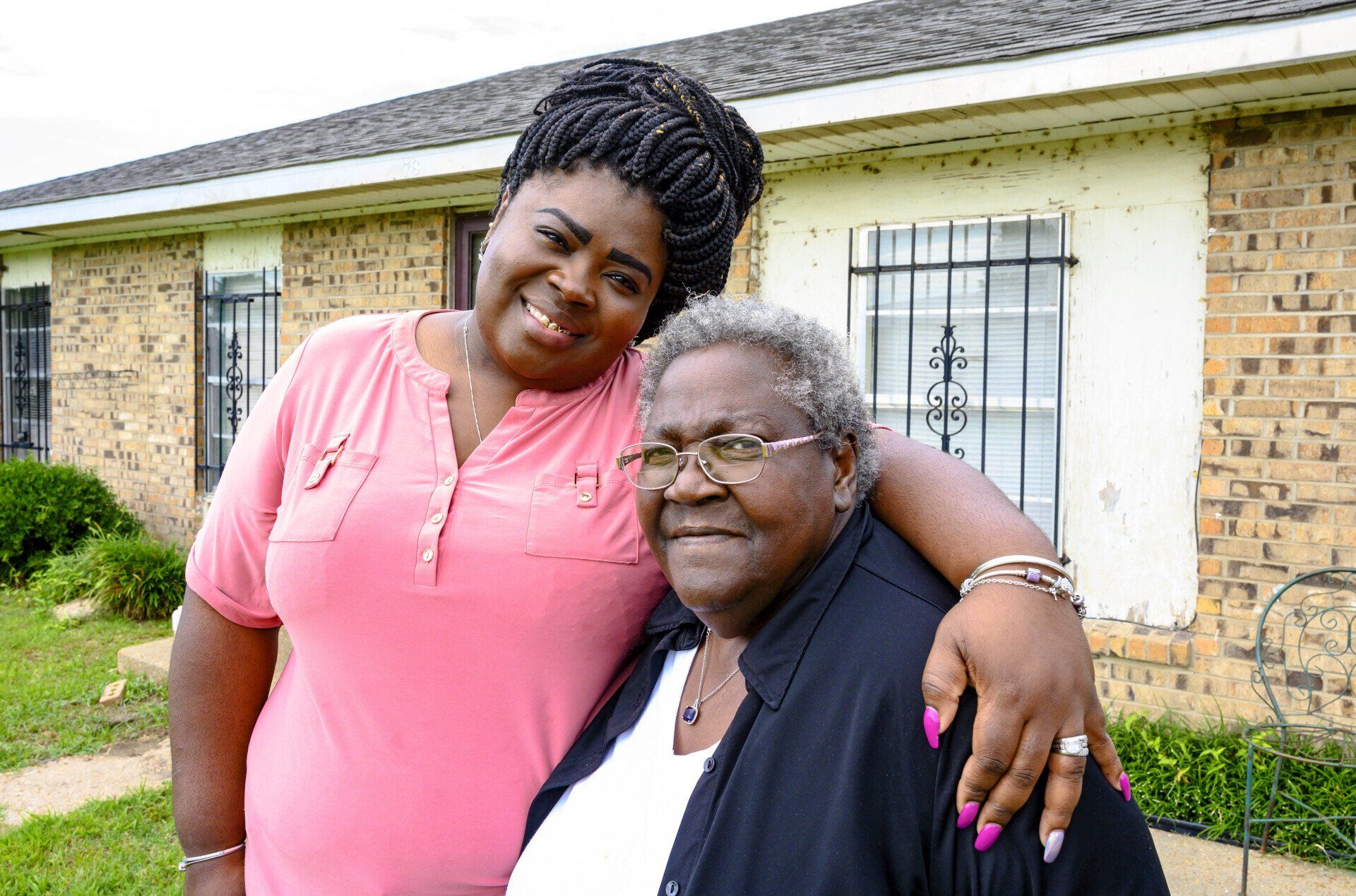


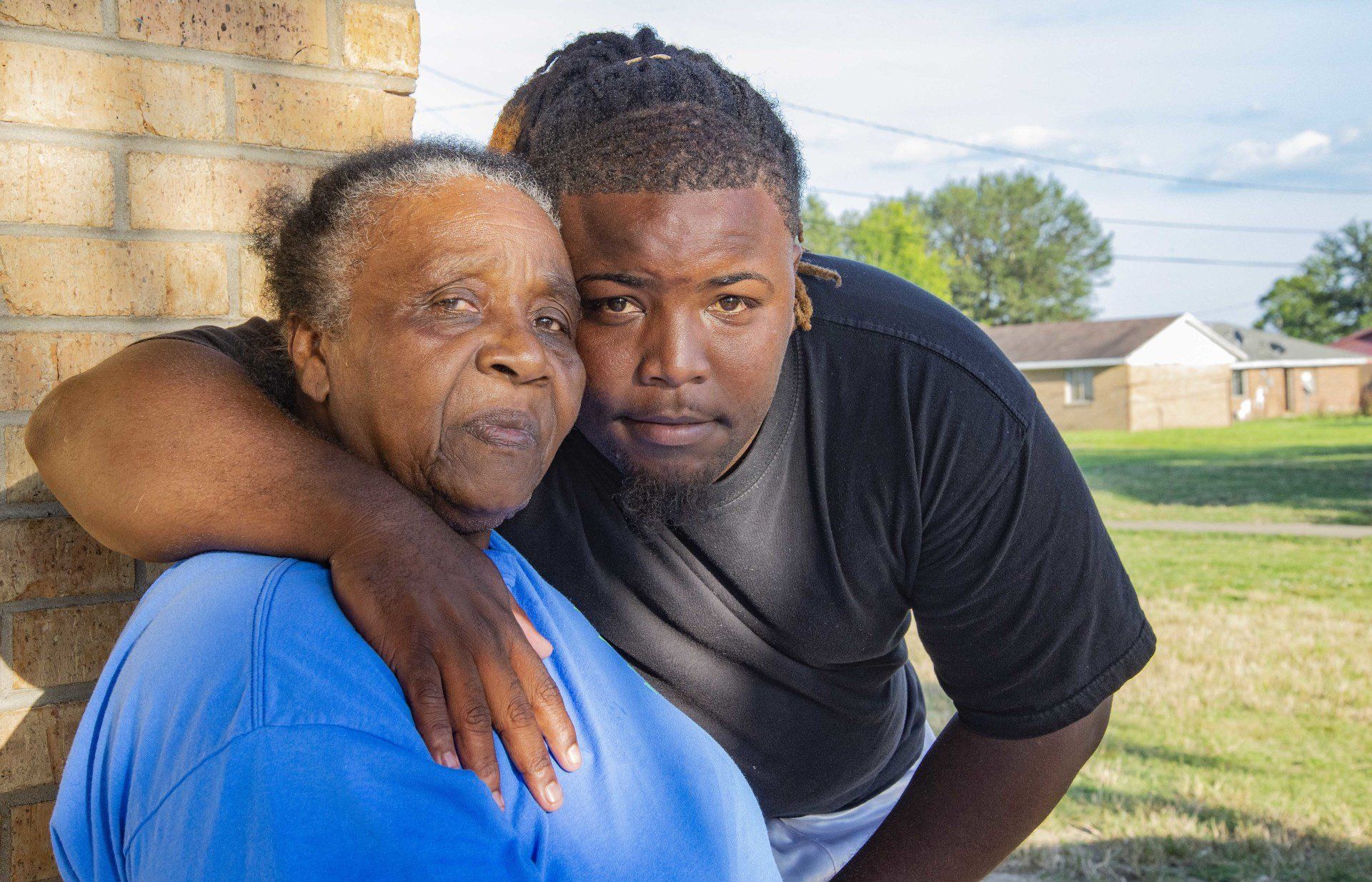

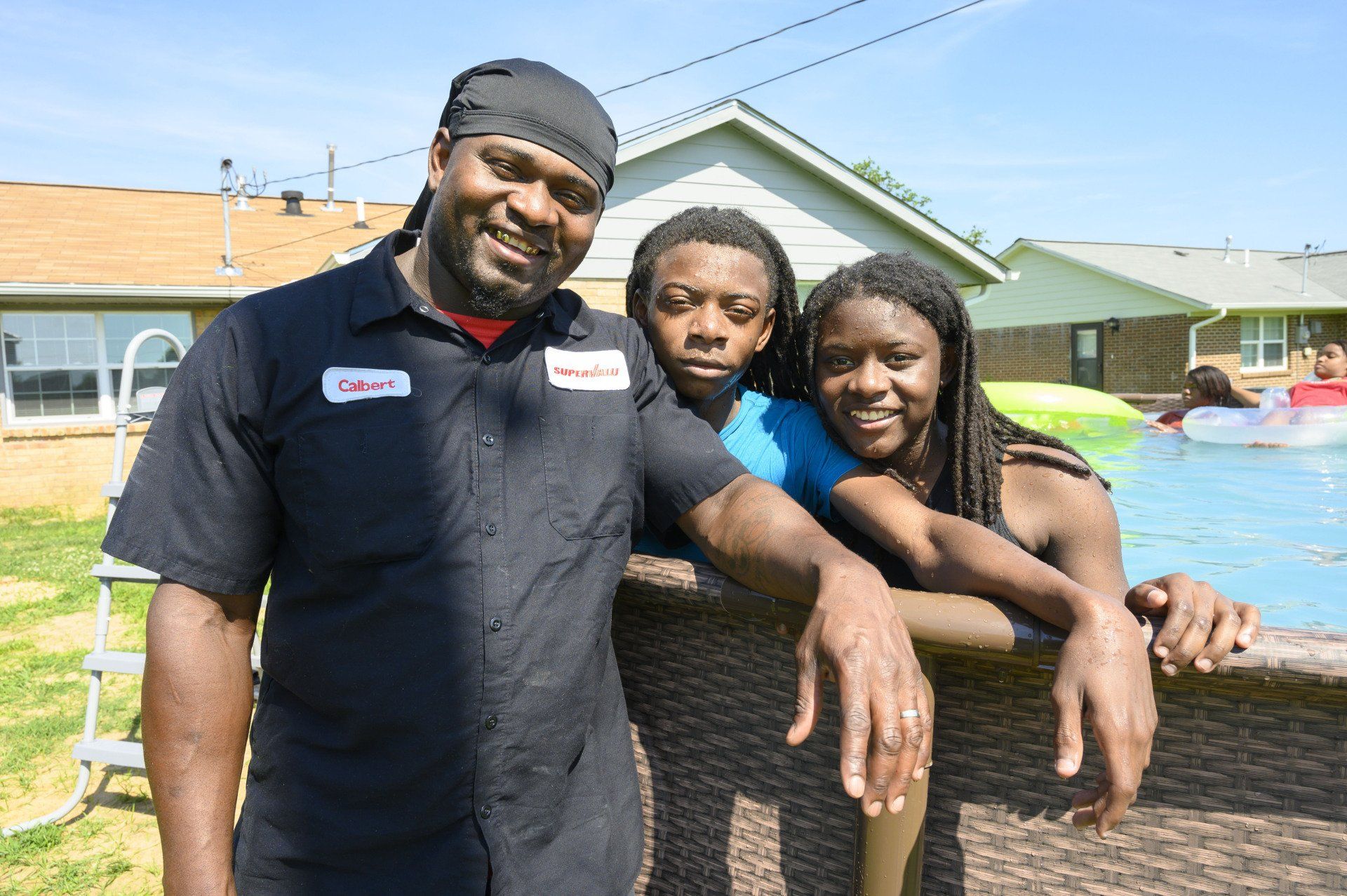
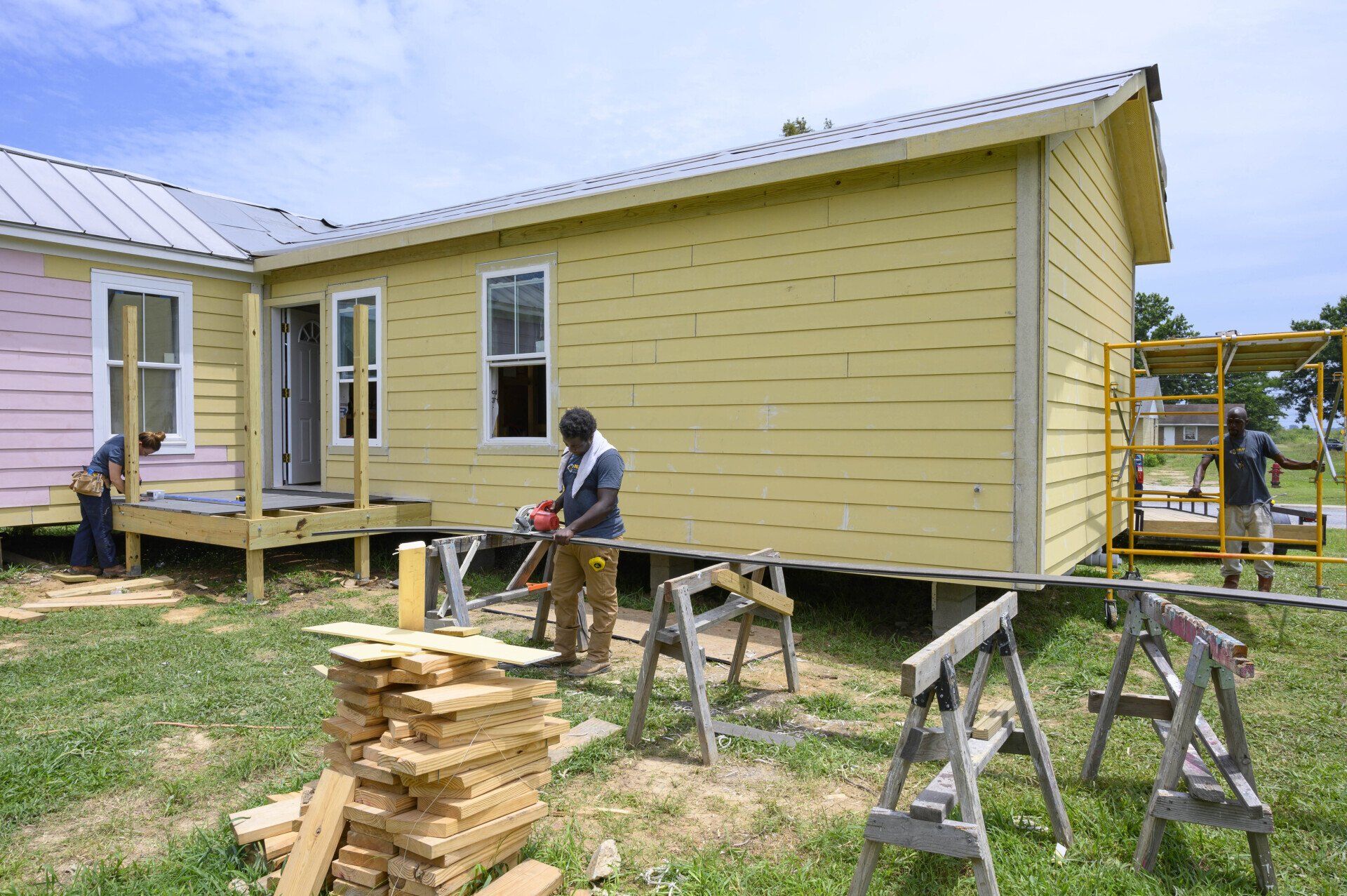


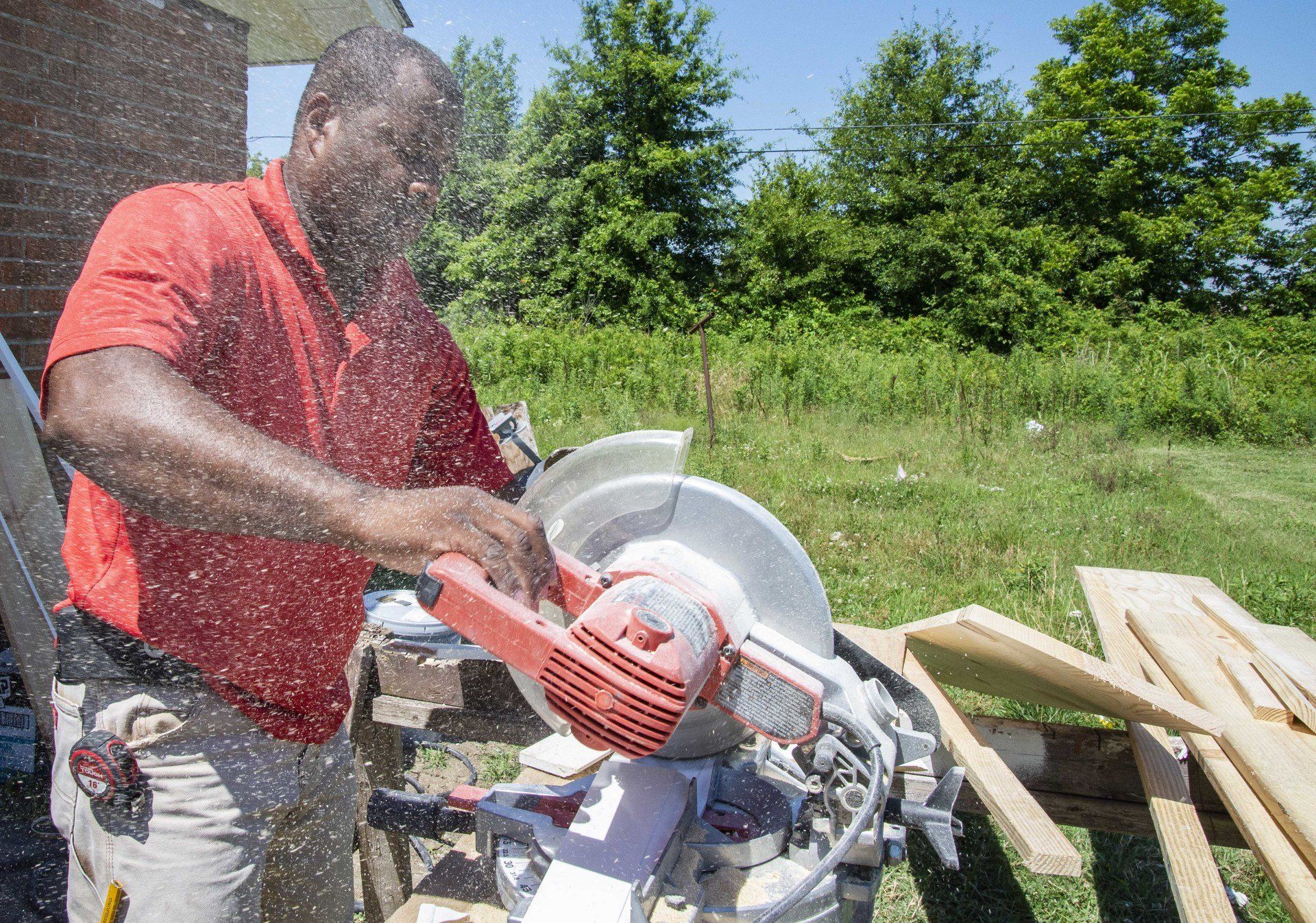


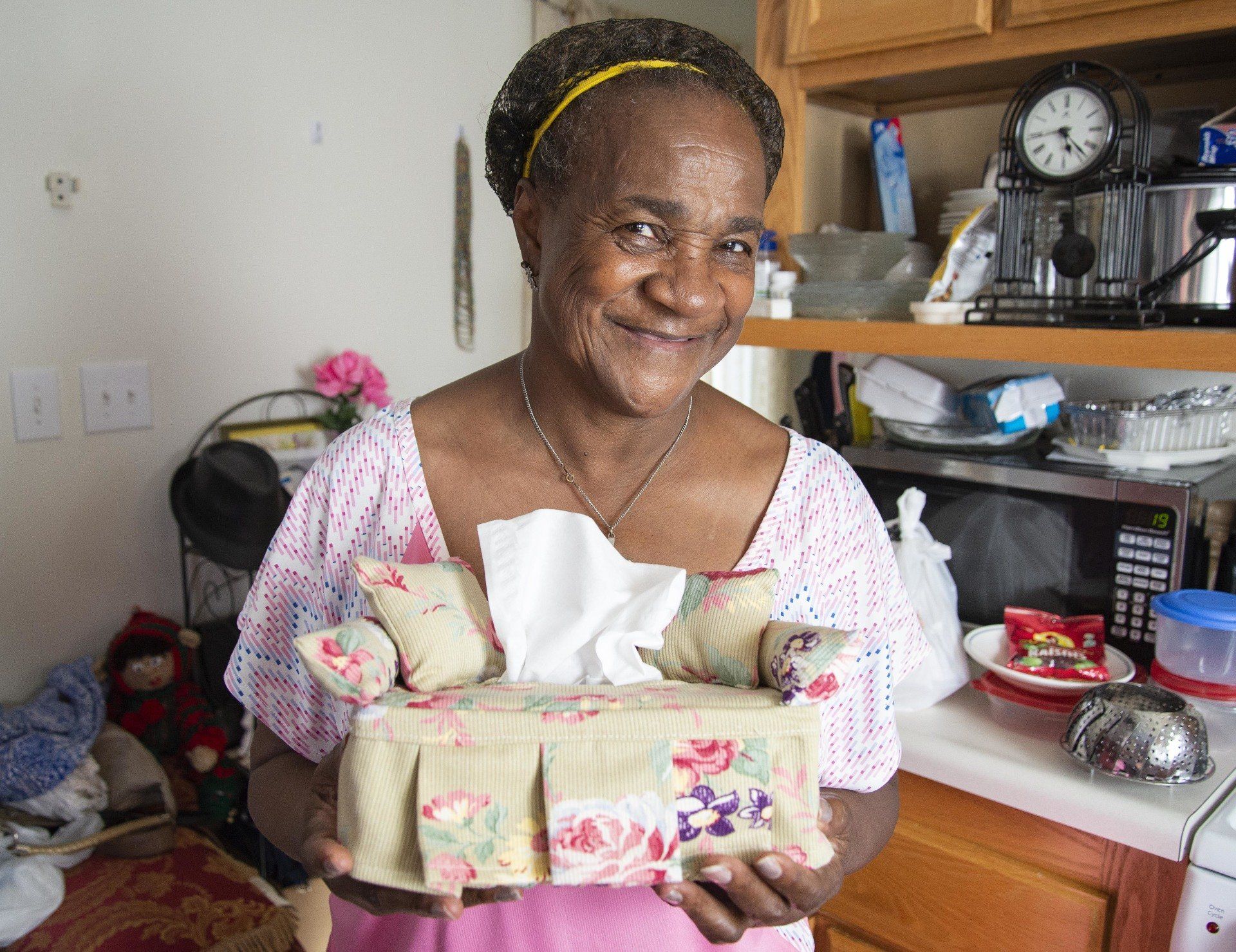
Below is text from the 2020 photojournalism exhibit, "There is More Work to Be Done", that featured Eastmoor alongside rural housing and community development work in California and Kentucky. Inspired by photographer and activist George "Elfie" Ballis, the exhibit "celebrates the struggle for affordable homes and stronger communities in rural America". Delta DB partnered with Rory Doyle whose photos were featured in this online exhibit.
The Eastmoor Subdivision, just outside of Moorhead, Mississippi in rural Sunflower County, is a prime example of the suffering caused by lack of oversight in affordable housing developments. In one of the most economically-challenged regions in America, a community of African American residents has faced distress for decades after a series of missteps and injustices related to the development and management of the homes in their neighborhood.
The 84-home Eastmoor development was approved by local elected officials in 1969, just half a mile east of Moorhead city limits. The city and county agreed, atypically, to share infrastructure ownership and management because of the proximity to city limits.
The location also meant residents, including Black residents who had recently gained the right to vote through the Voting Right Act of 1965, wouldn’t be eligible to vote in municipal elections. This detail alone is representative of the racial inequity and voter disenfranchisement issues that have plagued Mississippi for generations.
Emma Bush, 77, moved to Eastmoor with her husband Jerlean, now deceased, in 1971 with high hopes for raising their 10 children in a new home, leaving behind inadequate sharecropper housing.
“It was really exciting at first,” said Bush. “We’d been staying about nine miles away in the country with no water, no bathroom, no one else around. And I would always say, Lord, I hope we can get into one of those houses, and we did. We were just so rejoiced and happy.”
But evidence of inadequate building practices and deferred maintenance (at both the scale of the individual homes and the neighborhood’s storm sewer, sanitary sewer and road) accumulated and became prominent around 2000. Many homes were suffering from failing foundations, electrical issues, rotting shingles, pest infestations, and horrific failures in the sewer systems. According to Bush, it got so bad that no one would walk near her home for three years. Raw sewage seeped into their house through the toilet and bathtub, and after heavy rains, sewage would flood her front yard into a swampy mess.
Johnny Carter, 67, moved into a mobile home in the subdivision in 1990.
“Sometimes you’d look around and have to ask — is this America, or is this a third world country?”
After decades of decay and neglect, Eastmoor finally took a turn for the better. In 2001 Congressman Bennie Thompson visited the neighborhood and was so alarmed by the deteriorating conditions that he alerted the federal government, which discontinued the developer’s tax credits and Section 8 subsidies. Though this stemmed the tide of graft, the residents were left with the decision to relocate or continue to occupy homes that were neglected by the owner in a neighborhood neglected by the local governments.
In response, community members formed the Eastmoor Residents Association with the goal of staying in their homes and working together to realize better living conditions. This resilience eventually paid off when they were connected with the University of Mississippi’s Housing Law Clinic. After years of negotiations, the lawyers at the Law Clinic filed suit on behalf of the Eastmoor Residents Association against the developer, the city and the county in 2010. The suit was settled out of court and as a result the county repaired the road and the storm sewer, the city repaired the sanitary sewer, and the developer had to deed the properties to the occupants who had entered into unfair lease-purchase agreements with him.
Following the successful lawsuit, Eastmoor residents were finally homeowners, but the years of deferred maintenance had taken their toll, and the living conditions in many of the homes were unsafe and unhealthy. The Delta Design Build Workshop (Delta DB), a social impact design build firm, was invited to Eastmoor Residents Association meeting in 2016 to talk about what could be done for the homes. Delta DB co-founder Emily Roush-Elliott recalls leaving the meeting feeling like the resources needed for the neighborhood scale effort would be impossible to find, but around the same time HOPE Enterprise Corporation was also introduced to Eastmoor. Inspired by the story and seeking to support housing efforts in the Mississippi Delta, HOPE connected with various funders and secured funding to rehabilitate or replace 40 of the homes. Today, 27 homes have been rehabilitated and 13 new homes have been built or are under construction.
“I think of it as fighting for the baseline,” said Roush-Elliott. “Functional infrastructure, protection from predatory development practices, and living without fear of the floor beneath you shifting are expectations that all Americans have, but there are many examples like Eastmoor of people living in poverty, often people of color, struggling for years in pursuit of even this level of ‘normal.’”
Richard Elliott, Delta DB co-founder, led construction in Eastmoor over the past three years.
“Our biggest goal has been to reduce the stress level for the people living in Eastmoor,” Elliott said. “You’re always going to have stresses when it comes to housing, but our goal was to eliminate the unnecessary stresses here. For the most part, I think we’ve changed that in Eastmoor.”
Carter, who now lives in a replacement home in Eastmoor, said this approach has drastically changed the quality of life for him and his neighbors.
“The people at Hope and Delta Design Build Workshop have made us feel comfortable in our homes, and I’m so thankful for that,” he said. “The people who’ve worked on Eastmoor have blessed me. They’ve blessed us.”
Bush echoed praise for how much the subdivision has been revitalized.
“It just uplifts me to know that other people care about us,” she said. “Our prayers have been answered. I can’t thank everyone enough for helping us. I’m so happy to see Eastmoor building back up. We were down for a while, but we’ve come back. I asked God for a makeover, to pick us back up, and that’s what we got. I’ll be thanking God until the day he takes me out of this world.”
Another element of Delta DB’s mission is to hire staff members who have direct ties to the region, creating an opportunity to use their own hands to rebuild and revamp their communities. Greenwood, Mississippi native Dontavius McLemore, 22 has been working with the organization for over three years.
“I love this kind of work, because I’m the type of person who wants to make other people happy,” said McLemore. “I didn’t know about Eastmoor before I started working here, and I learned we could help make a difference. You can see that people were taken advantage of, and they weren’t cared for. This type of work shows that you can change something as a group. It’s a good feeling to know I can help people from my neighborhood.”
The highs and lows of Eastmoor’s story are reflective of America’s larger history with affordable housing developments. While residents remain thankful for the significant improvements, Elliott believes there is endless progress needed to rectify the systematic barriers that perpetuate these dilemmas.
“We’re at a really happy place in the story of Eastmoor right now, but racial inequity in the built environment is pervasive in the Mississippi Delta, and the successes in Eastmoor are the exception,” said Elliott. “There is so much more work to be done around safe, stable, affordable housing.”